The narrator's marriage to Susanna
You Should Have LeftThe marriage between the unnamed narrator and Susanna is the emotional and structural center of the family’s time at the mountain house: a relationship sustained by genuine love, repeatedly damaged by irritation and unequal pressures, and ultimately broken by infidelity and an impossible separation. Its domestic arguments initially seem ordinary, but the same tensions later become entangled with the house’s distortions of space, making marital fracture and supernatural disorientation unfold as parallel forms of collapse.
Beginnings and Family Life
The relationship has its foundation in an intense encounter nine years earlier, when the unnamed narrator met Susanna on Schmidt’s set. He remembers her as an exciting, beautiful, famous, and mysterious actress, and recalls wanting to touch her, kiss her, know everything about her, and spend his life with her. At that point, he expected his own career to advance from screenwriting to directing, while Susanna’s fame and professional identity made her seem an unlikely person to choose him. His recollection therefore presents the marriage as both a romantic triumph and the source of an identity he never expected to inhabit.
By the time of the mountain retreat, the couple are raising Esther, who has just turned four. Her growing independence has eased some of the constant disputes over who will get her up, put her to bed, or play blocks, trains, and Legos with her. Parenthood has not removed conflict, but it has changed its practical conditions: Esther can do more for herself, and the parents no longer have to negotiate every act of care with the same intensity. The family remains a functioning unit, organized around preschool, bedtime, meals, and the division of attention.
The marriage also carries a shared history that can briefly reappear beneath the accumulated fatigue. One night, the unnamed narrator and Susanna sit at the large living-room table until two in the morning, drink wine, and talk as they did in their early years. The baby monitor stands beside them even though Esther is no longer a baby and could come to them if frightened. Their conversation moves through the distance between first love and family routine, including the prospect that their lives would become filled with arguments about diapers and babysitters. The mountain setting, the lights in the valley going out one by one, and their decision to go to bed as they had in their best days create a temporary restoration of intimacy rather than a permanent cure.
Daily Strain and Emotional Pattern
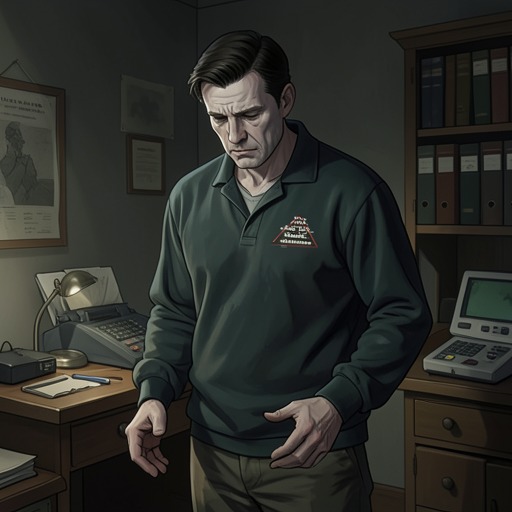
The unnamed narrator’s work is a persistent source of marital friction. He is trying to write in a new notebook, convinced that the retreat offers new surroundings, new ideas, and a new beginning, yet he cannot concentrate when Susanna and Esther enter the room. While they play noisily on the carpet, he continues scribbling so they will think he is working. He describes himself as genuinely busy because the production is waiting for him, but the performance of busyness also exposes his defensiveness: writing becomes both his occupation and a shield against family demands.
Susanna challenges that shield almost immediately. She reproaches him for beginning work as soon as they arrive instead of spending time with the family, and he answers that nothing will get done if he does not work, insisting that this is not how art is created. The exchange shows a recurring conflict over competing definitions of responsibility. The unnamed narrator experiences uninterrupted writing as necessary professional labor, while Susanna experiences his insistence on it as a refusal to participate in the family’s shared life. Neither position cancels the other, which is why the argument returns as a structural loop rather than being settled by a single compromise.
The narrator nevertheless states that he loves Susanna and does not want another life. He says that the secret of marriage is loving each other anyway and that he would not want to be without her, even that he would miss her actor’s laugh. He believes Susanna likewise would not want to be without him. This mutual attachment coexists with the admission that they get on each other’s nerves too often. The marriage is therefore not depicted as empty before its crisis; its tragedy lies in the persistence of love inside a relationship that has become a system of recurring irritation.
Their arguments are often buffered by Esther’s presence. At dinner, Susanna asks twice what is wrong, while the unnamed narrator answers that nothing is wrong and then counters by accusing her of acting strangely. Their tone sharpens, but Esther is simultaneously telling a confused story about a preschool friend named Lisi, Ilse, or Else. The parents respond with exaggerated encouragement until the child stops talking, and the relief draws them closer together. Family attention functions here as both a shared duty and an emotional diversion: the child interrupts the couple’s hostility, but the need to coordinate around her also keeps their strained partnership continuously exposed.
Infidelity and the Marriage Crisis
The decisive rupture comes through Susanna’s phone. After seeing a message from someone identified only as David, the unnamed narrator reads the words, "I want to touch you again." He initially searches for harmless explanations, imagining a joke, a message taken out of context, or a text sent to the wrong number. The message becomes devastating because it is both intimate and incomplete: it supplies evidence of desire while forcing him to reconstruct the relationship behind it.
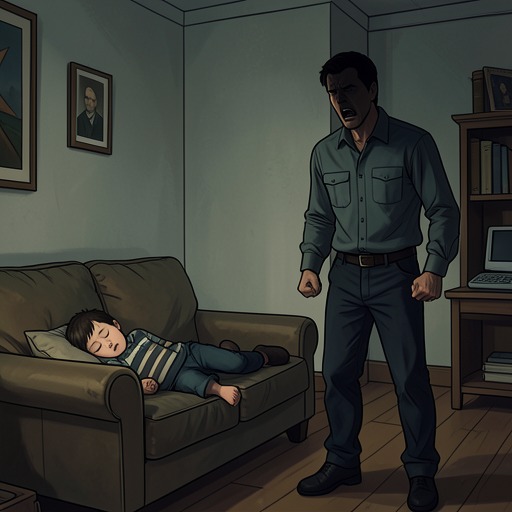
When he confronts Susanna, the scene turns the private discovery into an open marital crisis. He attempts to shout, though he gradually suspects that his voice has become only a croak, and tells her that he has copied the messages into his notebook. The notebook, originally associated with artistic renewal and professional progress, has become an archive of betrayal. He asks who David is and realizes that he has stumbled into the kind of life-collapse that might belong to one of his films. In fiction, he thinks, people can say clever things while their lives fall apart; in reality, the event is merely dismal and repugnant. His professional imagination offers no protection from the emotional fact.
Susanna does not deny the affair. Her calm acknowledgment is especially destructive because the unnamed narrator recognizes that he had hoped she would reject the evidence. She tells him to pull himself together and think of his daughter, then lifts Esther from the floor and announces that it is time for bed. Her response shifts immediately from marital confrontation to maternal care. Esther becomes the central practical concern, but also the figure around whom the marriage’s remaining obligations are organized.
The affair is not isolated from the couple’s earlier tensions. Before the discovery, Susanna complains about her agent and the scarcity of roles available to actresses over forty, while the unnamed narrator privately judges that she will never find a better agent and never stop complaining. Their conversations about preschool, aging parents, and a divorcing friend continue after the professional complaint, but even ordinary subjects now carry the pressure of a concealed breach. The marriage’s shared administrative life survives for a time, though its emotional foundation has been altered.
Attempts to Leave and the Spatial Crisis
After the discovery and the accumulating unease of the house, the couple agree that they must leave. In the rain, Susanna embraces the unnamed narrator and says that they will not spend one more night there. He repeats the decision. The urgency suggests that departure is motivated not only by the affair but also by the mountain house itself, whose corridors and objects have begun to resist ordinary perception. Yet the promise of leaving does not restore solidarity; it marks the point at which the family attempts to separate from the place and from the marriage crisis simultaneously.
The unnamed narrator’s efforts to protect Esther reveal how the marital conflict is reorganized around parental responsibility. In the early evening, he takes the phone from Esther, grasps her hand, and tells her that they must not turn around because it is a game. He walks backward with her through the hall, past the washing-machine room and a half-open door that seems newly present. Inside is an empty room with a naked lightbulb and a wooden chair missing a leg. He feels a powerful desire to enter but resists and pulls Esther onward. Even while attempting escape, he remains caught between curiosity about the house and the duty to keep the child moving.
The attempted exit fails. Carrying Esther through the dark woods, he reaches what appears to be the road and sees the illuminated window of the house ahead. The pointed roof, wide front door, empty parking area, long table, kitchen, and open hall door make the recognition undeniable: the family has returned to the house without choosing to do so. The reversal transforms the couple’s decision to leave into a spatial impossibility. Their marriage is now trapped in a setting where ordinary acts of departure cannot be trusted.
The house’s crisis also changes the meaning of family togetherness. Esther eventually lies completely relaxed and breathes deeply and evenly, as if freed, while the unnamed narrator believes there is nothing he can do. The child’s stillness contrasts with his frantic attempts to navigate the house and woods. The family bond that once regulated daily life can no longer guarantee safety, and Esther’s vulnerability makes the unnamed narrator’s failure to lead the family out more devastating.
Separation and Final Configuration
Susanna eventually returns by car, having called repeatedly and become deeply worried when the unnamed narrator stopped answering. She gets out while the engine is still running, pale and visibly strained, and rebukes him for disappearing when they have a child together. Her anger confirms that, despite the affair and the decision to leave, the parental bond still imposes immediate obligations. She is not simply arriving as an estranged spouse; she is reclaiming contact with the father of her daughter in the midst of an emergency.
Susanna addresses David without treating him as a rival who can replace the marriage. She says that he is not important, that she does not care about him, that he means nothing to her, and that she never wants to see him again. She calls the affair a mistake, a horrible mistake. These statements offer remorse and repudiation, but they do not undo the knowledge created by the messages or repair the trust that has been broken. The marriage’s future cannot be restored merely by declaring the third party insignificant.
Esther is placed in the back seat, visibly feverish, and the unnamed narrator kisses her before closing the car door. The child’s fever intensifies the urgency of the departure and makes the family’s final arrangement practical before it becomes emotional: Susanna and Esther are leaving together, while the unnamed narrator remains connected to them through care, guilt, and loss. He and Susanna face each other, embrace for several seconds, and then separate with the sense that the gesture has already lasted too long.
The unnamed narrator finally tells Susanna to go. She nods, gets into the car, and drives away with Esther. He sees Esther’s pale face in the rear window before the car disappears around the bend, and he continues to hear the engine for a while after they are gone. The marriage therefore ends not through a settled legal or emotional resolution but through physical separation: Susanna and Esther return to the road, while he turns back toward the house. His feeling of being split into two beings—one knowing he will never see them again, another uncertain whether he would even want to return—makes the ending a fracture in identity as well as in partnership.
Narrative Significance
The marriage links the novel’s ordinary domestic realism to its impossible geometry. Arguments about work, childcare, phones, sleep, and emotional availability establish a recognizable family system before the house begins to alter distance and direction. As the spatial crisis intensifies, marital communication becomes equally unstable: messages conceal a relationship, accusations produce uncertain voices, and promises to leave cannot be fulfilled. The house does not simply interrupt the marriage; it externalizes the couple’s inability to occupy a stable shared reality.
The relationship is also defined by a tension between love and separateness. The unnamed narrator’s memories of the first encounter with Susanna, the late-night conversation that resembles their best days, and his insistence that neither wants life without the other all preserve the marriage as emotionally real. At the same time, his work repeatedly becomes an excuse for withdrawal, Susanna’s resentment becomes a recurring counterforce, and the affair exposes an intimacy that has moved beyond the marriage. Their final embrace does not erase these contradictions. It concentrates them into a brief farewell in which affection, exhaustion, betrayal, parenthood, and the terror of irreversible departure coexist.
The ending leaves the marriage suspended between ordinary abandonment and metaphysical dislocation. Susanna and Esther drive away, but the unnamed narrator is left with the house, the place where the family’s reality has become impossible to stabilize. The marriage that began as a shared life chosen with extraordinary intensity thus concludes as a divided arrangement: mother and daughter depart into the car, while the husband remains behind, still bound to them by love but no longer able to follow.